Loading...
Sierra Vista slopes lose soil every monsoon season. A properly built concrete retaining wall stops that cycle and protects your yard, driveway, and foundation for decades.
Concrete retaining walls in Sierra Vista hold back sloped soil so it does not wash away during monsoon rains, most residential projects take two to five days of active construction plus about a week of curing time before backfill.
If your yard has a slope near a patio, driveway, or the side of your house, every summer storm moves a little more soil downhill. Over a few seasons that adds up - and once erosion starts, it tends to accelerate. A concrete retaining wall puts a permanent boundary between the slope and whatever is downhill from it.
Beyond stopping erosion, a well-placed wall can turn an unusable hillside into a level pad you can actually work with. If you are also considering hardscape improvements, concrete floor installation pairs well with a new retaining wall when you are leveling an area for a patio or outbuilding.
If you notice bare patches, ruts, or small channels forming on a sloped part of your yard after a heavy summer storm, that is erosion happening in real time. Sierra Vista's intense monsoon downpours can move a surprising amount of soil in a single storm. Once erosion starts it tends to get worse each season.
A wall that is tilting forward or showing horizontal cracks near the middle is under stress it was not designed to handle - often from water pressure building up behind it. This is especially common in older Sierra Vista neighborhoods where walls built in the 1980s and 1990s may not have had adequate drainage. A leaning wall will not fix itself and can fail suddenly.
If there is a grade change within a few feet of your driveway, patio, or home's foundation, that slope is putting slow, constant pressure on whatever is downhill from it. You may not see dramatic erosion yet, but over time - especially with repeated monsoon seasons - that movement adds up. A retaining wall creates a stable boundary that protects those structures.
If you notice standing water near your foundation after a storm, it may mean the grading around your home is directing water toward the house instead of away from it. A retaining wall combined with proper regrading can redirect that flow and protect your foundation from long-term moisture damage - which is a much more expensive repair than a wall.
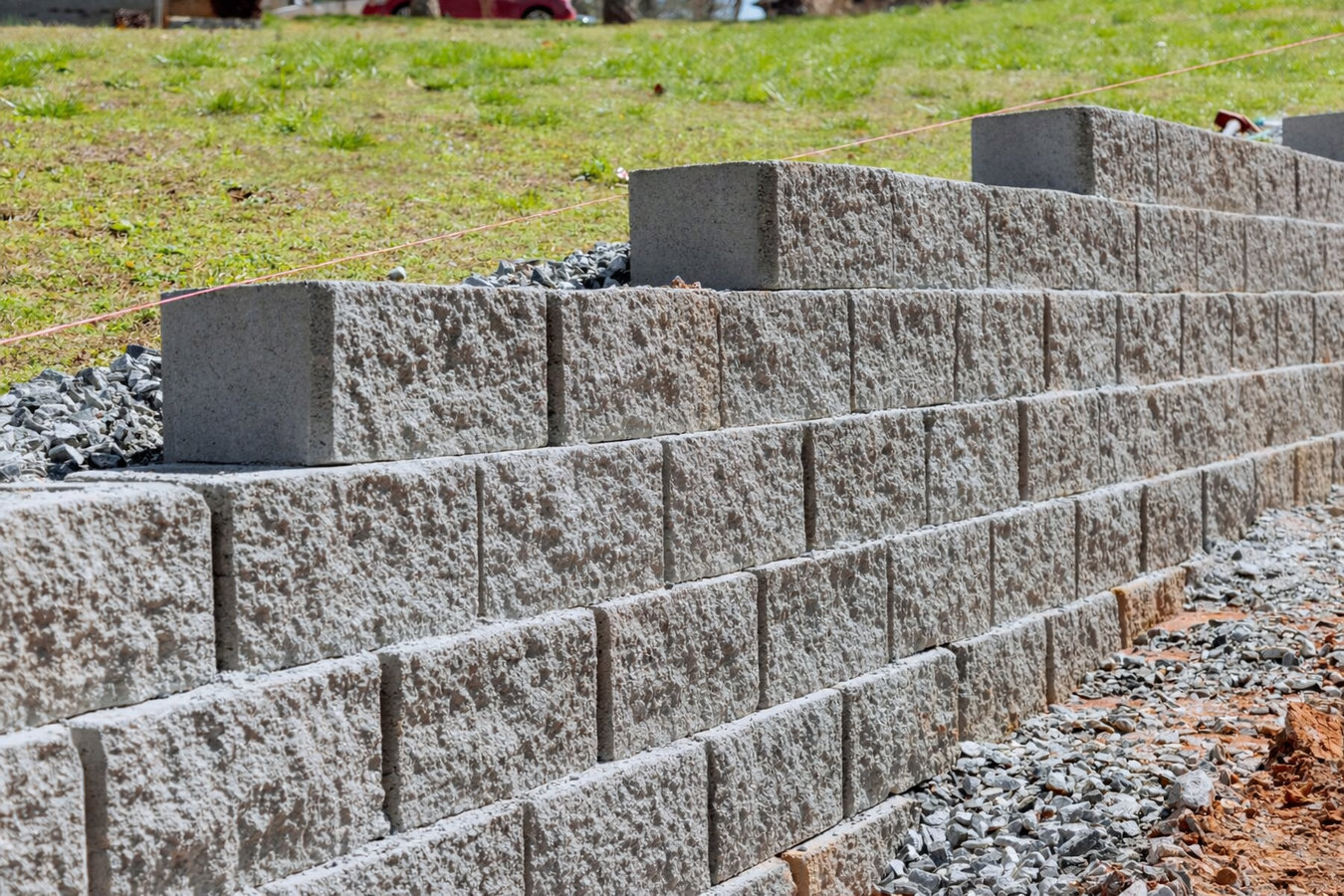
We build poured concrete walls and concrete block (CMU) walls for residential properties throughout Sierra Vista. Both options are durable and handle Arizona's soil conditions well - the choice comes down to your budget, the height and length of the wall, and how you want the finished surface to look. Every project includes proper drainage design: gravel backfill and perforated pipe behind the wall so water has somewhere to go instead of building up pressure against the structure.
We also handle permit applications with the City of Sierra Vista on your behalf, so you are not navigating that process yourself. For properties where the wall is part of a larger project, we can coordinate with our concrete floor installation work or tie into concrete footings for added structural support. Accurate footings underneath the wall are what make the difference between a wall that lasts 50 years and one that starts to lean after five.
Best for homeowners who want a smooth, monolithic finish and maximum structural strength for taller walls.
A practical choice for mid-height walls where cost efficiency matters and a textured surface finish is acceptable.
Gravel backfill and perforated pipe behind every wall - suited for any Sierra Vista property where monsoon runoff is a concern.
For homeowners who want the City of Sierra Vista permit pulled and managed by the contractor, not left to figure out themselves.
Sierra Vista averages around 15 inches of rain per year - more than most of Arizona - and much of it arrives in intense monsoon storms between July and September. Those storms can dump a significant amount of rain in a very short time, and fast-moving water is exactly what erodes hillside yards and pushes against retaining walls. If your yard has any slope at all, monsoon season is when you will see the problem most clearly. The clay-heavy soils found throughout Cochise County add another layer of stress: that soil expands when wet and shrinks when dry, putting extra pressure on walls that were not designed with it in mind. We work throughout the Sierra Vista area, including properties near Fort Huachuca's surrounding neighborhoods, where many retaining walls from the 1980s and 1990s are approaching the end of their service life.
Homeowners in Bisbee and Huachuca City face similar terrain and soil conditions, and we serve both communities regularly. If you are outside Sierra Vista proper and wondering whether we cover your area, reach out - we work throughout southeastern Arizona and are familiar with the permit requirements and soil conditions across this part of Cochise County. For authoritative guidance on how retaining walls should be designed and built, the American Concrete Institute publishes widely used standards that inform how quality contractors approach this work.
Call or message us, describe what you are dealing with, and we will schedule a free on-site visit. You will receive a written quote that covers scope, materials, drainage plan, and whether the permit is included - no surprise line items added later.
For walls that require a City of Sierra Vista building permit, we submit the application and manage the process. Plan for roughly one to two weeks for permit processing - we will keep you updated and tell you when work can begin.
The crew excavates the footing trench, builds the wall, and installs gravel backfill and perforated drainage pipe as the wall goes up. Most residential walls take one to three days of active construction - this is the busiest and most disruptive part of the project.
After the wall is up, the concrete needs at least seven days to cure before the area behind it is backfilled and loaded. We compact the soil, grade it so water drains away from the wall, then walk the finished project with you before we leave the site.
Free on-site estimate. We pull the permit. No surprise costs.
(520) 523-1256Every wall we build includes gravel backfill and perforated drainage pipe behind it. Poor drainage is the number-one reason retaining walls fail in Sierra Vista, and we address it on every project, not just the ones where it is obviously required.
Cochise County's expansive clay soils expand and contract with every wet-dry cycle. We design footing depths and drainage systems around local soil conditions, not a generic plan copied from somewhere else. Ask any contractor you talk to how they handle expansive soil - the answer tells you a lot.
We handle the City of Sierra Vista permit application from submission through inspection. You get a copy of the approved permit to keep with your home records - important if you ever sell the property and someone asks whether the work was done legally.
Arizona requires concrete and masonry contractors to hold an active license through the Arizona Registrar of Contractors before doing this type of work. Our license is current and verifiable - you can look it up on the ROC website at roc.az.gov.
Retaining walls are one of the more technically demanding concrete projects a homeowner can undertake - the drainage design matters as much as the concrete itself. We bring both the technical knowledge and the local experience to get it right the first time.
Level the area behind your new retaining wall with a poured concrete floor built to Sierra Vista's climate and soil conditions.
Learn MoreProper footings beneath your wall are what prevent settling and leaning - a critical step for walls on sloped or clay-heavy lots.
Learn MoreSierra Vista's summer storms do not wait - get your wall permitted and in the ground while the weather is on your side.